Introduction to Sound Healing for Yoga Teachers
Yoga has always been more than physical movement. Along with asanas, yoga teachers often work with breathing, meditation, awareness, relaxation, concentration, and inner balance. As students increasingly look for deeper wellness experiences, many yoga teachers are exploring complementary practices that can naturally fit into their existing teaching approach. Sound healing is one such practice that is attracting growing interest among yoga professionals.
Sound healing uses instruments such as singing bowls, gongs, tuning forks, tingsha bells, and other sound-producing tools to create immersive auditory experiences. Yoga teachers can learn how sound can be incorporated into meditation, relaxation, breathwork, restorative yoga, and wellness sessions. Rather than replacing yoga, sound practices can become another method for creating a calm and focused environment.
The Connection Between Yoga and Sound
Sound has a long association with yogic traditions. Practices involving mantra, chanting, sacred sounds, and attentive listening have been used as part of contemplative traditions for centuries. Modern sound healing training introduces practitioners to instruments and structured sound practices that can complement these traditional approaches.
For a yoga teacher, this connection can make sound healing particularly interesting. A teacher already understands the importance of creating a suitable atmosphere, guiding attention, and helping students transition from physical activity toward deeper relaxation. Sound can become an additional tool within that process.
Sound Can Support a Relaxing Yoga Environment
One reason yoga teachers explore sound healing is its ability to contribute to the atmosphere of a session. The sustained tones of singing bowls or the gradual resonance of a gong can provide an auditory focus while students remain still or move slowly through a practice.
Instead of relying only on verbal instructions, a teacher can use sound as part of the environment. This can be particularly useful during restorative yoga, meditation, Yoga Nidra-inspired relaxation, or closing relaxation practices.
Adding Sound to Meditation Practices
Meditation often involves developing awareness of the present moment. Sound can provide a simple object of attention. A practitioner may invite students to listen carefully to a bowl, bell, or other instrument and observe how the sound changes over time.
This approach can help create a transition from external activity toward quieter observation. Yoga teachers who already teach meditation may therefore find sound practices relatively easy to integrate into appropriate sessions after receiving suitable training.
Using Singing Bowls in Yoga Classes
Singing bowls are among the most commonly associated instruments with modern sound healing sessions. Their sustained resonance makes them suitable for opening or closing a class, meditation practices, relaxation periods, or dedicated sound sessions.
Simple Applications for Yoga Teachers
- Using a bowl at the beginning of class to create a clear transition into practice.
- Using gentle sounds during meditation or breath awareness.
- Creating a calming transition before final relaxation.
- Using sound as an auditory focus during seated practices.
- Developing dedicated sound relaxation sessions after appropriate training.
Sound Healing and Breathwork
Breathwork and sound practices can complement each other because both encourage attention and awareness. A yoga teacher may introduce gentle sound while students practice slow breathing, allowing the sound to become part of the overall sensory experience.
However, the teacher should avoid overwhelming students with excessive stimulation. The purpose should be to support the practice rather than make the sound the only focus. Learning how to select instruments, volume, timing, and transitions is therefore an important part of responsible sound healing training.
Creating Deeper Relaxation Sessions
Many yoga teachers already conduct relaxation at the end of a class. Sound healing can provide another way to structure this portion of the session. Instead of ending immediately after the final posture, the teacher can gradually introduce sustained sounds while students remain comfortably relaxed.
This can create a distinctive experience and give students an opportunity to practice attentive listening while resting. A dedicated sound relaxation session can also become a separate offering for students who are interested in meditation and wellness.
Learning Beyond Simply Playing a Bowl
Learning sound healing involves more than knowing how to strike a singing bowl. A professional approach requires an understanding of sound production, instrument handling, session structure, communication, safety considerations, and professional boundaries.
Playing an instrument and facilitating a sound healing session are two different skills. A teacher who wants to integrate sound responsibly should learn how to create an intentional sequence rather than simply producing random sounds throughout a yoga class.
Understanding Different Sound Healing Instruments
Yoga teachers can explore several instruments during their sound healing education. Singing bowls, gongs, tuning forks, tingsha bells, and other instruments each create different auditory characteristics.
Common Instruments to Explore
- Tibetan singing bowls: Often used for sustained tones and meditation-focused practices.
- Crystal bowls: Known for clear, resonant tones and commonly used in contemporary sound sessions.
- Gongs: Capable of producing broad and layered sounds.
- Tuning forks: Useful for focused tonal practices.
- Tingsha bells: Often used for transitions, opening, or closing moments.
Improving the Student Experience
Yoga teachers are constantly looking for ways to create meaningful experiences for their students. Sound healing can provide another dimension to a class by engaging the sense of hearing while students practice movement, breathing, or stillness.
For students who enjoy meditation and relaxation, a thoughtfully designed sound experience may become a memorable part of their yoga journey. This does not mean every class needs sound. Instead, teachers can learn when sound is appropriate and when silence may be more beneficial.
Developing a More Versatile Teaching Skill Set
Continuing education allows yoga teachers to expand their professional knowledge. Sound healing training can add another skill to an existing teaching background and may help teachers design different types of wellness sessions.
A teacher might eventually offer yoga combined with sound meditation, restorative yoga with sound relaxation, breathwork followed by sound, or dedicated sound healing sessions. The exact format depends on the teacher's training, experience, professional scope, and the needs of the students.
Why Proper Training Matters
Responsible practice requires more than enthusiasm. Teachers should understand how instruments work, how to position them, how to control volume, how to communicate with participants, and how to respond appropriately if someone feels uncomfortable.
Training can also introduce ethical considerations. A sound healing practitioner should avoid making unsupported medical promises and should understand the difference between wellness support and medical treatment.
Choosing a Sound Healing Course
Yoga teachers considering sound healing training should look for a course that provides practical experience as well as theoretical understanding. Important areas may include instrument techniques, session planning, meditation, sound awareness, practical demonstrations, ethics, and supervised practice.
- Check whether students receive hands-on practice with multiple instruments.
- Look for structured lessons rather than only demonstrations.
- Ask whether session planning is included.
- Understand what certification the course provides.
- Check whether the course is suitable for your existing professional background.
How Sound Healing Can Complement a Yoga Career
Sound healing does not have to replace yoga teaching. For many practitioners, it can become an additional area of specialization. A yoga teacher may use sound during selected classes or develop separate sound-focused sessions.
This can also encourage continued learning. As practitioners become familiar with different instruments and session formats, they can develop their own approach while remaining grounded in responsible practice and clear professional boundaries.
Starting Your Sound Healing Journey
For yoga teachers, learning sound healing can be a natural extension of an existing interest in meditation, relaxation, mindfulness, and holistic wellness. The journey can begin with understanding basic sound principles and gradually progress toward practical session facilitation.
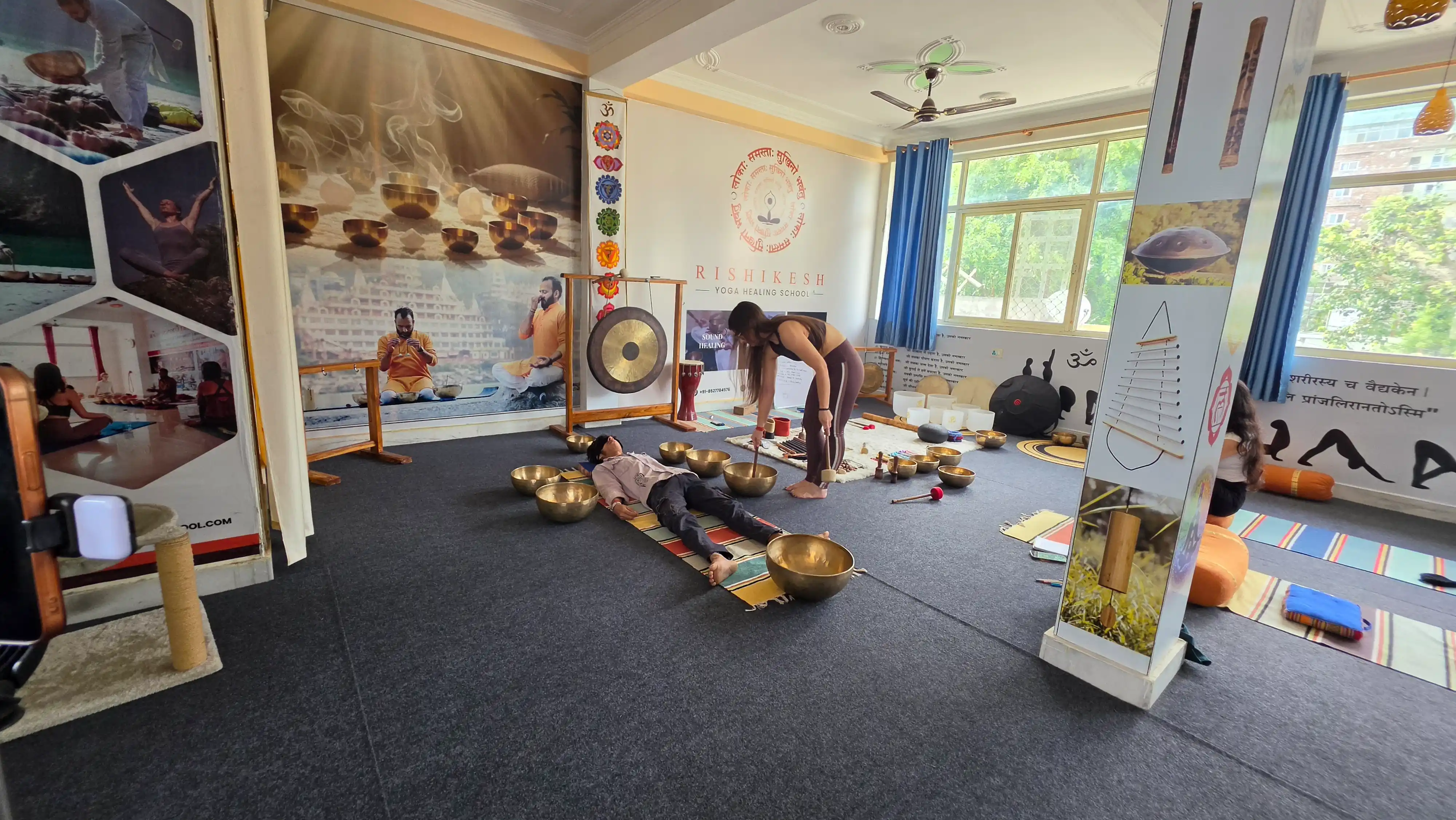
Rishikesh Yoga Healing School offers sound healing training designed for people interested in developing practical knowledge of sound healing and its applications. A structured learning environment can help students move beyond simply playing instruments and begin understanding how to create intentional sound-based experiences.
Conclusion
Yoga teachers are exploring sound healing because it can complement several areas of their existing practice, including meditation, breathwork, relaxation, restorative yoga, and mindful awareness. Singing bowls, gongs, tuning forks, and other instruments can provide new possibilities for creating focused and immersive sessions.
The most important step is to approach sound healing as a skill that requires learning, practice, awareness, and responsible facilitation. With appropriate education and hands-on experience, yoga teachers can explore how sound may become a meaningful addition to their professional toolkit.
Related Articles
- What Is Sound Healing? A Beginner's Complete Guide
- How Does Sound Healing Work? Science, Frequencies & Benefits
- 15 Benefits of Sound Healing for Mind and Body
- Sound Healing for Anxiety: Can Vibrations Calm the Mind?
- Sound Healing for Better Sleep: Does It Really Help?
- What Happens During a Sound Healing Session? Complete Beginner's Guide
- Sound Healing vs Meditation: What's the Difference?
- Singing Bowls Explained: How They Help in Healing
- Tibetan Singing Bowls vs Crystal Singing Bowls: Which Is Better?
- Best Healing Frequencies Explained (396Hz–963Hz): Complete Guide
- What Is Sound Bath Meditation? Benefits & Beginner Guide
- Can Sound Healing Reduce Stress Naturally
- Is Sound Healing Backed by Science? Research, Benefits & Facts
- Chakra Sound Healing: Understanding Each Energy Center
- 7 Signs Your Body Needs Sound Healing
- How Different Sound Healing Instruments Create Different Experiences
- Crystal Singing Bowl Sizes Explained: How Bowl Size Influences Sound
- Chakras and Sound Healing: Exploring the Traditional Connection
- How to Choose Your First Crystal Singing Bowl
- Mallet vs Rubber O-Ring: Understanding Crystal Bowl Playing Techniques
- Group Sound Healing vs Individual Sessions: Understanding the Differences
- Sound Healing vs Music Therapy: What Is the Difference
- 7 Sound Healing Instruments Every Beginner Should Know
- The History of Singing Bowls: From Traditional Use to Modern Wellness
- Can You Feel Sound Vibrations? Understanding Vibration and Body Awareness
- Tuning Forks in Sound Healing: What Are They and How Are They Used
- What Are Solfeggio Frequencies and Why Are They Popular in Sound Healing
- What Should You Learn Before Offering Sound Healing Sessions Professionally
- Different Types of Gongs and Their Uses in Sound Sessions
- How to Develop Listening Skills as a Sound Healing Practitioner
Start Your Sound Healing Learning Journey
Join our sound healing programs and explore the power of sound, vibration, and holistic wellness.
Contact Us