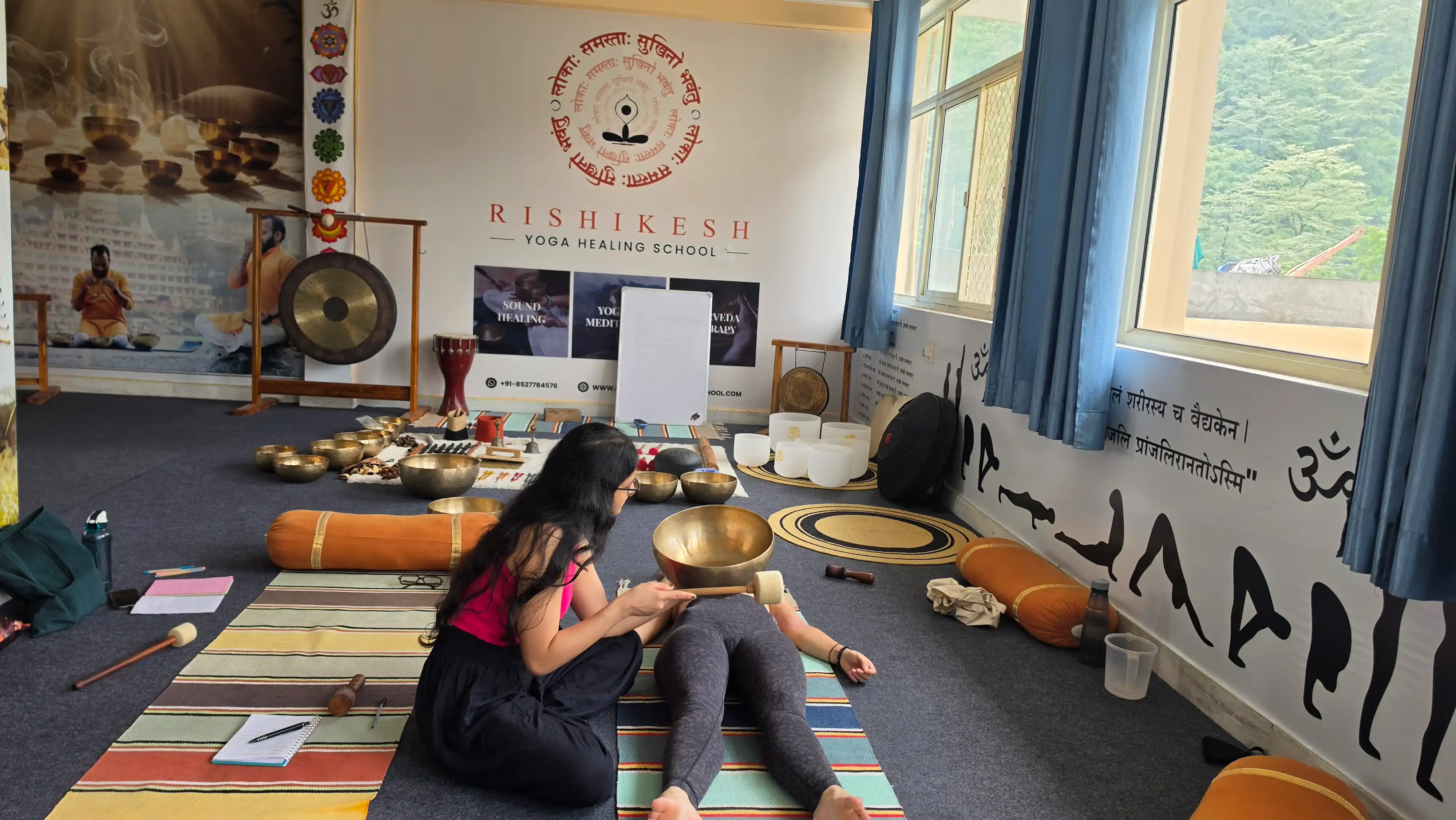
Introduction to Sound Healing Training
Sound healing has become an increasingly popular area of study among yoga teachers, meditation practitioners, wellness professionals, and people interested in holistic practices. As interest grows, learners have more options for education, including online courses and in-person training programs.
Both formats can provide useful learning opportunities, but they create different educational experiences. Understanding these differences can help students choose a learning format that matches their goals, schedule, resources, and preferred learning style.
What Is Online Sound Healing Training?
Online sound healing training allows students to study through digital lessons, recorded videos, live classes, demonstrations, assignments, or a combination of these methods. Students can usually participate from their own location and may have greater flexibility around their schedules.
This format can be particularly convenient for students who cannot travel to a training center or who already have professional responsibilities that make attending a fixed schedule difficult.
What Is In-Person Sound Healing Training?
In-person training takes place at a physical location where students and teachers learn together. Students can directly observe demonstrations, hear instruments in the same room, practice techniques, and receive immediate guidance.
For sound healing, the physical environment can be especially relevant because sound is experienced through hearing as well as through the acoustic characteristics of a room.
Learning Sound Through Direct Experience
One important difference between online and in-person learning is direct sensory experience. A recorded demonstration can show how a bowl is played, but hearing the instrument directly in a physical room provides another level of experience.
Students can hear how resonance changes with distance, room size, playing technique, and instrument selection. These experiences can be difficult to reproduce completely through a computer speaker.
Hands-On Instrument Practice
Sound healing requires practical skills. Students need to learn how to hold instruments, use mallets, strike bowls, create resonance, control timing, and combine instruments appropriately.
In-person training provides opportunities to practice these skills while an instructor observes the student's technique. Immediate corrections can help students understand what they are doing differently and how to improve.
The Flexibility of Online Learning
Online education has a major advantage in flexibility. Students may be able to study from home and organize lessons around their existing responsibilities.
Online Training May Suit Learners Who
- Live far from sound healing training centers.
- Have limited travel opportunities.
- Prefer studying at their own pace.
- Already own sound healing instruments.
- Need flexible scheduling.
The Structured Environment of In-Person Training
In-person courses can provide a dedicated learning environment. Students travel to a specific location, attend scheduled classes, practice with other learners, and participate in a structured routine.
For some learners, separating study time from everyday responsibilities can make it easier to concentrate on practical training.
Learning From Other Students
Group learning can be another important part of in-person training. Students can observe one another, practice together, exchange experiences, and hear how different people use instruments.
This interaction can expose learners to different playing styles and encourage them to think about how they want to develop their own approach.
Teacher Feedback and Correction
Feedback is particularly important when learning instruments. Small differences in grip, striking technique, movement, timing, and pressure can change the sound.
In-person teachers can observe these details directly. Online teachers can also provide feedback through live video or submitted practice recordings, but the experience may depend heavily on the quality of the student's equipment and internet connection.
Understanding Sound in a Physical Room
A sound healing session is influenced by the room in which it takes place. Walls, floors, ceiling height, furniture, and participant positioning can affect the way sound travels.
In-person training allows students to experience these acoustic differences directly. This can be valuable for learners who eventually plan to conduct group sound sessions in studios, retreat centers, or wellness spaces.
Cost and Travel Considerations
Online training may reduce travel and accommodation expenses. However, students may need to purchase their own instruments before or during the course. In-person programs may involve travel, accommodation, meals, and other costs, depending on the location and course package.
Students should compare the complete cost rather than looking only at the course fee.
Certification and Course Quality
Whether a course is online or in person, students should investigate the actual curriculum. A certificate alone does not demonstrate the complete quality or practical depth of a training program.
- Check the number of training hours.
- Review the subjects covered.
- Understand whether practical training is included.
- Check how assessments or practice are handled.
- Understand the certification terminology used by the school.
- Look at the instructor's experience and teaching background.
Can Online Training Teach Practical Sound Healing?
Online learning can introduce students to sound healing theory, instrument demonstrations, session structure, meditation applications, and other concepts. Students can also practice independently if they have suitable equipment.
However, the amount of direct supervision varies between courses. Students interested in professional practice should therefore check whether live demonstrations, teacher feedback, practical assignments, or other forms of guidance are included.
Can In-Person Training Be Combined With Online Learning?
Some learners use a blended approach. They may complete introductory theory online and then attend an in-person workshop for practical training. Others may take an in-person foundation course and use online resources for continued learning.
This approach can allow students to combine flexibility with hands-on experience.
Choosing the Right Learning Format for Your Goal
The most suitable format depends on what the learner wants to achieve. Someone seeking basic knowledge may appreciate the convenience of online education, while someone who wants extensive hands-on practice may place greater importance on direct classroom experience.
Students should consider their learning style, access to instruments, travel possibilities, available time, budget, and professional goals before selecting a course.
Sound Healing Training in Rishikesh
Rishikesh is widely associated with yoga, meditation, and spiritual learning, making it a location where students can combine sound healing education with a broader wellness environment.
Rishikesh Yoga Healing School offers sound healing training for learners who want to study sound healing techniques through structured education and practical learning in Rishikesh.
Conclusion
Online and in-person sound healing training each provide different advantages. Online learning can offer convenience and flexibility, while in-person education can provide direct interaction, practical instrument experience, and immediate teacher feedback.
Instead of assuming that one format is universally suitable, learners should examine the curriculum, practical components, instructor support, course duration, equipment requirements, certification, and total cost. The right choice ultimately depends on the student's circumstances and learning objectives.
Related Articles
- What Is Sound Healing? A Beginner's Complete Guide
- How Does Sound Healing Work? Science, Frequencies & Benefits
- 15 Benefits of Sound Healing for Mind and Body
- Sound Healing for Anxiety: Can Vibrations Calm the Mind?
- Sound Healing for Better Sleep: Does It Really Help?
- What Happens During a Sound Healing Session? Complete Beginner's Guide
- Sound Healing vs Meditation: What's the Difference?
- Singing Bowls Explained: How They Help in Healing
- Tibetan Singing Bowls vs Crystal Singing Bowls: Which Is Better?
- Best Healing Frequencies Explained (396Hz–963Hz): Complete Guide
- What Is Sound Bath Meditation? Benefits & Beginner Guide
- Can Sound Healing Reduce Stress Naturally
- Is Sound Healing Backed by Science? Research, Benefits & Facts
- Chakra Sound Healing: Understanding Each Energy Center
- 7 Signs Your Body Needs Sound Healing
- How Different Sound Healing Instruments Create Different Experiences
- Crystal Singing Bowl Sizes Explained: How Bowl Size Influences Sound
- Chakras and Sound Healing: Exploring the Traditional Connection
- How to Choose Your First Crystal Singing Bowl
- Mallet vs Rubber O-Ring: Understanding Crystal Bowl Playing Techniques
- Group Sound Healing vs Individual Sessions: Understanding the Differences
- Sound Healing vs Music Therapy: What Is the Difference
- 7 Sound Healing Instruments Every Beginner Should Know
- The History of Singing Bowls: From Traditional Use to Modern Wellness
- Can You Feel Sound Vibrations? Understanding Vibration and Body Awareness
- Tuning Forks in Sound Healing: What Are They and How Are They Used
- What Are Solfeggio Frequencies and Why Are They Popular in Sound Healing
- What Should You Learn Before Offering Sound Healing Sessions Professionally
- Different Types of Gongs and Their Uses in Sound Sessions
- How to Develop Listening Skills as a Sound Healing Practitioner
Start Your Sound Healing Learning Journey
Join our sound healing programs and explore the power of sound, vibration, and holistic wellness.
Contact Us