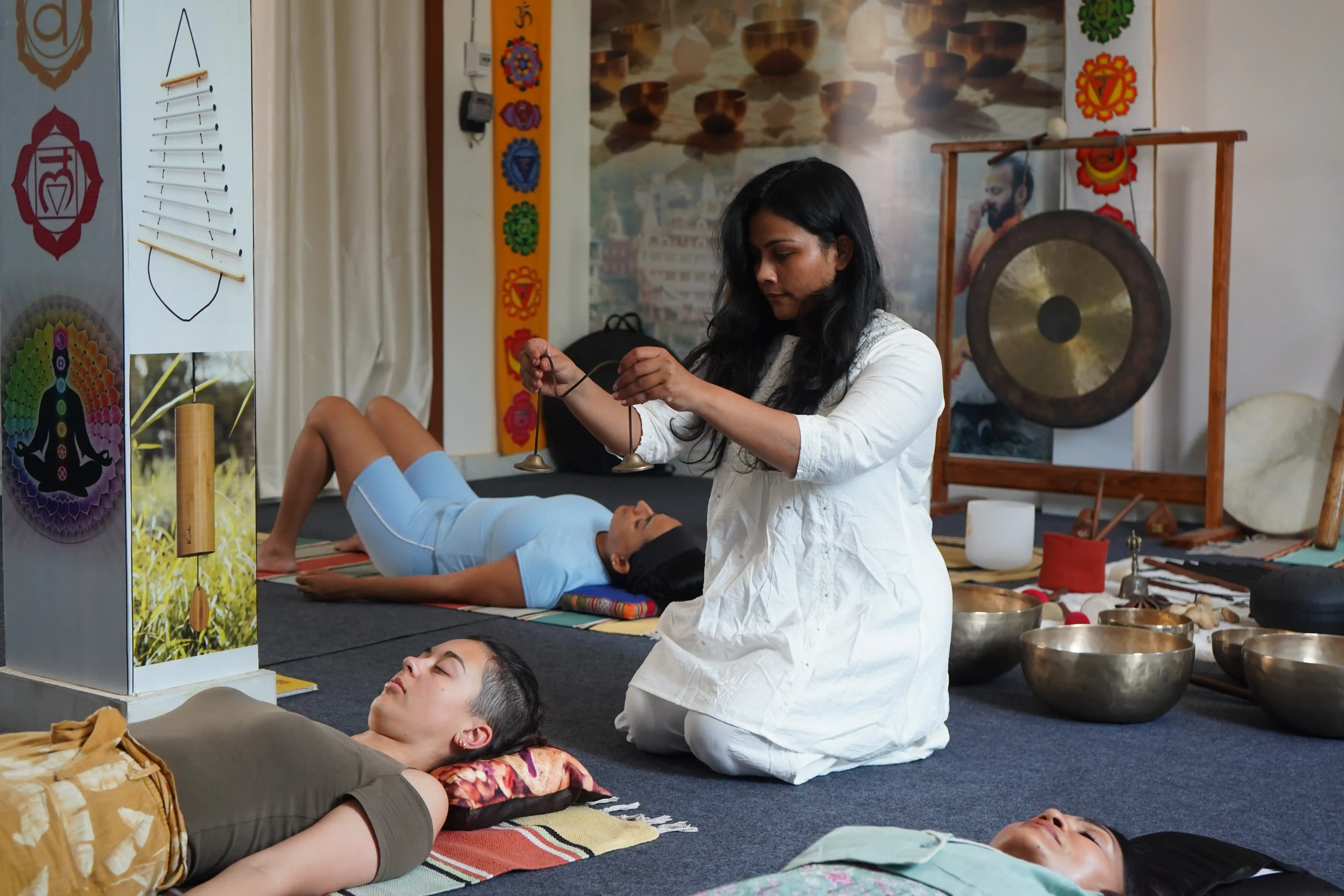
Introduction to Different Sound Healing Instruments
Sound healing practitioners can work with many different instruments, and each one produces its own type of sound and resonance. Singing bowls, crystal bowls, gongs, tuning forks, tingsha bells, chimes, drums, and other instruments can all become part of a sound-based wellness session.
Learning different instruments is not simply about knowing how to make a sound. Practitioners need to understand technique, timing, intensity, placement, transitions, and how each instrument fits into the overall session.
Why Instrument Knowledge Matters
Every instrument responds differently to touch, movement, pressure, and striking technique. A practitioner who understands these differences can make more intentional choices during a session.
Instrument knowledge also helps practitioners avoid using sounds that are too loud, too repetitive, or unsuitable for the environment.
Working With Tibetan Singing Bowls
Tibetan singing bowls are widely used in sound healing and meditation practices. Beginners can start by learning basic striking techniques and gradually develop more advanced playing skills.
The practitioner should pay attention to the bowl's resonance and allow enough time for the sound to develop and fade naturally.
Basic Singing Bowl Practices
- Place the bowl securely.
- Use the appropriate mallet.
- Strike gently and intentionally.
- Listen to the resonance.
- Allow sufficient space between sounds.
- Experiment with different techniques under guidance.
Working With Crystal Singing Bowls
Crystal singing bowls are known for their clear and sustained tones. They are often used during meditation and relaxation sessions.
Because these instruments can be delicate, practitioners should handle them carefully. Their sound can also be strong in smaller rooms, so volume and participant comfort should always be considered.
Working With Gongs
Gongs can create broad, layered sound experiences. Unlike smaller bowls, they can fill a room with a much larger range of sound.
Practitioners should learn controlled gong techniques before using them in group sessions. Different mallets, striking positions, and pressure can change the sound considerably.
Working With Tuning Forks
Tuning forks produce focused tones and can be incorporated into specific sound practices. Their small size makes them easy to store and transport.
Beginners should learn how to activate the fork correctly and understand the context in which it is appropriate to use it. Proper training can help prevent inaccurate or exaggerated claims about what tuning forks can accomplish.
Working With Tingsha Bells
Tingsha bells produce a bright and distinctive sound. They can be useful for opening and closing practices or marking transitions between different sections of a session.
The practitioner should use them with intention. Because their sound can be sharp and clear, repeated use may become distracting during a relaxation session.
Working With Chimes
Chimes can introduce lighter, delicate sounds. They may be used during transitions or to create an atmospheric element in a session.
As with every instrument, practitioners should learn how to control timing and volume. Chimes should support the session rather than compete with other sounds.
Working With Drums
Drums introduce rhythm and a different type of auditory experience. They can be used in certain sound practices where rhythmic elements are appropriate.
Practitioners should learn how to control tempo, volume, and intensity. Strong rhythmic playing may not be suitable for every relaxation session.
Combining Multiple Instruments
Once practitioners understand individual instruments, they can explore combinations. A session might begin with a singing bowl, introduce gentle chimes, use a gong during the central section, and return to softer bowl tones during the closing.
The combination should be planned carefully. Too many instruments at once can make it difficult for participants to distinguish individual sounds.
Understanding Instrument Transitions
Transitions help create a coherent session. A practitioner can allow one sound to fade completely before introducing another or use a softer instrument to connect two different sounds.
Good transitions make the session feel intentional rather than fragmented.
Controlling Volume and Intensity
Volume is one of the most important practical considerations. Every room responds differently to sound, and an instrument that feels gentle in a large space may feel much stronger in a smaller room.
Practitioners should learn to adjust their playing based on the environment and participant feedback.
Using Silence Between Instruments
Silence allows the previous sound to settle. It also gives participants an opportunity to notice the difference between sounds.
A skilled practitioner does not need to continuously play instruments throughout a session. Silence can create contrast and help maintain a sense of spaciousness.
Choosing Instruments for Different Sessions
The instruments selected should match the session's purpose. A quiet meditation may benefit from subtle bowls and bells, while a larger sound experience may include gongs and multiple bowls.
The practitioner should also consider participant numbers, room acoustics, available space, and their own level of training.
Maintaining and Storing Instruments
Sound healing instruments should be handled carefully and stored appropriately. Regular cleaning, careful transportation, and suitable storage can help maintain their condition.
Practitioners should also regularly inspect mallets, stands, cushions, and other accessories to ensure they remain suitable for use.
Learn Different Instruments Through Practical Training
Learning instruments directly from an experienced instructor can help beginners understand techniques that are difficult to learn from written instructions alone. Hands-on practice allows students to hear the difference between techniques and receive corrections.
Rishikesh Yoga Healing School offers sound healing training in Rishikesh where students can explore different sound healing instruments and learn practical techniques for meditation, relaxation, and sound-based sessions.
Conclusion
Working with different sound healing instruments requires patience, listening, technique, and intentional session planning. Singing bowls can provide a strong foundation, while crystal bowls, gongs, tuning forks, tingsha bells, chimes, and drums can expand a practitioner's range as their skills develop.
The goal is not to use as many instruments as possible. Instead, practitioners should learn how each instrument behaves, understand when it is appropriate, control its intensity, and integrate it thoughtfully into a complete session. With structured training and consistent practice, different sound healing instruments can become valuable tools for creating organized and mindful sound experiences.
Related Articles
- What Is Sound Healing? A Beginner's Complete Guide
- How Does Sound Healing Work? Science, Frequencies & Benefits
- 15 Benefits of Sound Healing for Mind and Body
- Sound Healing for Anxiety: Can Vibrations Calm the Mind?
- Sound Healing for Better Sleep: Does It Really Help?
- What Happens During a Sound Healing Session? Complete Beginner's Guide
- Sound Healing vs Meditation: What's the Difference?
- Singing Bowls Explained: How They Help in Healing
- Tibetan Singing Bowls vs Crystal Singing Bowls: Which Is Better?
- Best Healing Frequencies Explained (396Hz–963Hz): Complete Guide
- What Is Sound Bath Meditation? Benefits & Beginner Guide
- Can Sound Healing Reduce Stress Naturally
- Is Sound Healing Backed by Science? Research, Benefits & Facts
- Chakra Sound Healing: Understanding Each Energy Center
- 7 Signs Your Body Needs Sound Healing
- How Different Sound Healing Instruments Create Different Experiences
- Crystal Singing Bowl Sizes Explained: How Bowl Size Influences Sound
- Chakras and Sound Healing: Exploring the Traditional Connection
- How to Choose Your First Crystal Singing Bowl
- Mallet vs Rubber O-Ring: Understanding Crystal Bowl Playing Techniques
- Group Sound Healing vs Individual Sessions: Understanding the Differences
- Sound Healing vs Music Therapy: What Is the Difference
- 7 Sound Healing Instruments Every Beginner Should Know
- The History of Singing Bowls: From Traditional Use to Modern Wellness
- Can You Feel Sound Vibrations? Understanding Vibration and Body Awareness
- Tuning Forks in Sound Healing: What Are They and How Are They Used
- What Are Solfeggio Frequencies and Why Are They Popular in Sound Healing
- What Should You Learn Before Offering Sound Healing Sessions Professionally
- Different Types of Gongs and Their Uses in Sound Sessions
- How to Develop Listening Skills as a Sound Healing Practitioner
Start Your Sound Healing Learning Journey
Join our sound healing programs and explore the power of sound, vibration, and holistic wellness.
Contact Us