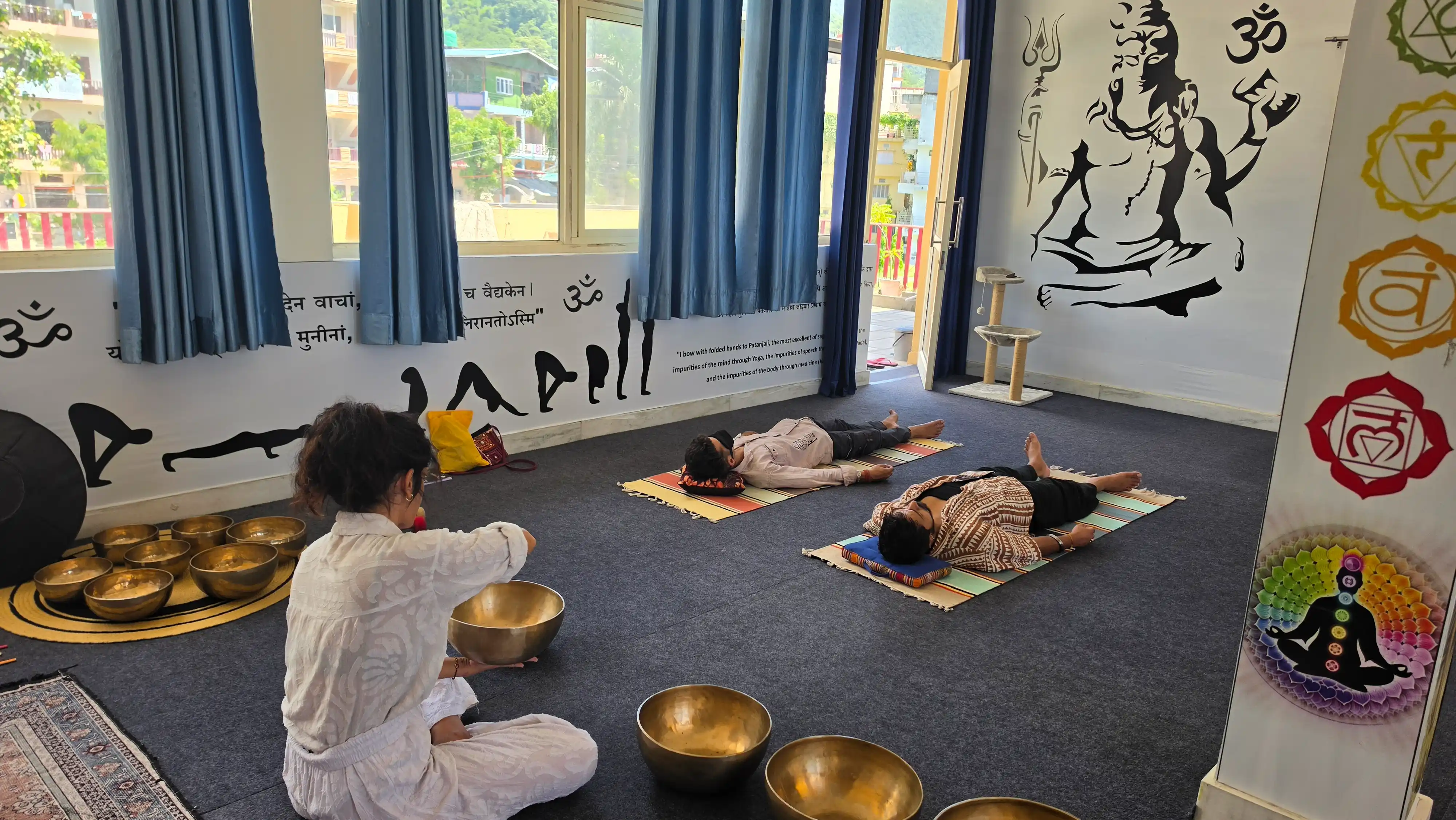
Introduction to Sound in Meditation
Sound has a natural place in meditation because listening can provide an object of attention. Instead of focusing exclusively on the breath or physical sensations, participants can be guided to notice tones, resonance, rhythm, silence, and the gradual disappearance of sound.
Sound healing instruments such as singing bowls, gongs, tuning forks, tingsha bells, and chimes can therefore be incorporated into meditation and relaxation sessions. The key is to use sound intentionally rather than continuously.
Understanding the Purpose of Sound
Before introducing an instrument, a practitioner should understand why the sound is being used. It may be used to begin a session, establish an auditory focus, create transitions, support relaxation, or mark the end of a practice.
Having a clear purpose helps prevent a session from becoming a random sequence of sounds. Every instrument does not need to be played simply because it is available.
Creating the Right Environment
The environment plays an important role in relaxation. The room should be clean, comfortable, and suitable for quiet practice. Participants should have enough space to sit or lie down without feeling crowded.
External noise should also be considered. A sound meditation session does not require complete silence, but excessive background noise can make it difficult for participants to focus on subtle sounds.
Beginning With Silence
Silence can be an important part of a sound session. Starting with a short period of quiet allows participants to become aware of their breathing and surroundings before the first sound is introduced.
This also creates contrast. When a sound eventually appears, participants may notice its characteristics more clearly because the session began quietly.
Using Singing Bowls for Meditation
Singing bowls can be useful for meditation because their tones may continue resonating after the initial strike. A practitioner can invite participants to listen closely as the sound begins, develops, becomes softer, and eventually fades.
This creates a simple listening exercise. Instead of trying to force the mind to become completely empty, participants can observe the changing sound with relaxed attention.
Introducing Gentle Sound Gradually
A relaxation session should generally develop gradually. Starting with very intense or loud sounds may be uncomfortable for some participants. A practitioner can begin with gentle tones and gradually introduce additional sounds if appropriate.
A Gentle Progression
- Begin with silence and guided breathing.
- Introduce a soft singing bowl.
- Allow the resonance to fade naturally.
- Introduce another sound when appropriate.
- Use periods of silence between sounds.
- Gradually reduce the intensity toward the end.
Using Gongs in Relaxation Sessions
Gongs can create complex layers of resonance. Their sound may be used during longer relaxation experiences, but practitioners should understand how to control intensity.
Gong playing requires practice. Strong striking can create very powerful sounds, which may not be appropriate for every participant or every room. Learning controlled techniques is therefore essential.
Using Tuning Forks and Bells
Tuning forks and bells can provide focused sounds within a meditation session. A tuning fork may create a distinct tone, while a tingsha bell can mark transitions.
These instruments can be especially useful when a practitioner wants to create clear boundaries between different sections of a session.
Guiding Participants With Voice
Sound healing does not always mean remaining completely silent as a facilitator. The practitioner's voice can help participants understand what to do and when to transition.
Instructions should generally be calm and concise. Excessive talking can interrupt relaxation, so the facilitator should learn when to speak and when to allow the instruments and silence to carry the session.
Combining Sound With Breath Awareness
Breath awareness can be combined with sound meditation. Participants may be invited to notice the natural rhythm of breathing while also listening to the resonance of an instrument.
The practitioner should avoid forcing a particular breathing pattern unless appropriately trained to teach that practice. A simple invitation to notice the breath can be enough for a relaxation-focused sound session.
Allowing Space Between Sounds
One of the most overlooked skills in sound facilitation is knowing when not to play. Silence gives participants time to notice the after-effect of a sound and settle into the experience.
A well-designed sound session is not necessarily the session with the most sounds. Strategic pauses can make the overall experience more spacious and less overwhelming.
Considering Participant Comfort
Every participant responds differently to sound. Some people may enjoy deep resonance, while others may prefer soft and subtle tones. Practitioners should provide information about the session and encourage participants to communicate if they feel uncomfortable.
Volume, instrument placement, room size, and participant position should all be considered when designing a session.
Creating a Closing Practice
The ending of a sound meditation should be gradual. Abruptly stopping a sound session and immediately asking participants to stand can interrupt the transition back into normal activity.
The practitioner can reduce the frequency and intensity of instruments, introduce silence, offer a short grounding instruction, and allow participants time to sit quietly before moving.
Practicing Sound Meditation Professionally
Practitioners who want to facilitate sound meditation should learn instrument techniques and session design through appropriate training. Practical experience can help them understand how sound behaves in different environments.
Training can also help practitioners understand communication, consent, participant comfort, and professional boundaries.
Learning Sound Meditation in Rishikesh
Rishikesh provides a learning environment where yoga, meditation, and sound-based practices are commonly explored. Students interested in developing sound meditation skills can look for structured courses that combine theory with hands-on practice.
Rishikesh Yoga Healing School provides sound healing training in Rishikesh for learners interested in singing bowls, meditation, relaxation practices, and sound healing techniques.
Conclusion
Sound can be a useful component of meditation and relaxation sessions when it is used intentionally. Singing bowls, gongs, tuning forks, bells, and other instruments can create auditory points of attention and support transitions within a session.
The foundation of a good sound meditation is not simply the number of instruments used. It is the practitioner's ability to listen, control sound, create appropriate pauses, communicate clearly, and respect participant comfort. With training and consistent practice, sound can become a valuable tool within a broader meditation and wellness practice.
Related Articles
- What Is Sound Healing? A Beginner's Complete Guide
- How Does Sound Healing Work? Science, Frequencies & Benefits
- 15 Benefits of Sound Healing for Mind and Body
- Sound Healing for Anxiety: Can Vibrations Calm the Mind?
- Sound Healing for Better Sleep: Does It Really Help?
- What Happens During a Sound Healing Session? Complete Beginner's Guide
- Sound Healing vs Meditation: What's the Difference?
- Singing Bowls Explained: How They Help in Healing
- Tibetan Singing Bowls vs Crystal Singing Bowls: Which Is Better?
- Best Healing Frequencies Explained (396Hz–963Hz): Complete Guide
- What Is Sound Bath Meditation? Benefits & Beginner Guide
- Can Sound Healing Reduce Stress Naturally
- Is Sound Healing Backed by Science? Research, Benefits & Facts
- Chakra Sound Healing: Understanding Each Energy Center
- 7 Signs Your Body Needs Sound Healing
- How Different Sound Healing Instruments Create Different Experiences
- Crystal Singing Bowl Sizes Explained: How Bowl Size Influences Sound
- Chakras and Sound Healing: Exploring the Traditional Connection
- How to Choose Your First Crystal Singing Bowl
- Mallet vs Rubber O-Ring: Understanding Crystal Bowl Playing Techniques
- Group Sound Healing vs Individual Sessions: Understanding the Differences
- Sound Healing vs Music Therapy: What Is the Difference
- 7 Sound Healing Instruments Every Beginner Should Know
- The History of Singing Bowls: From Traditional Use to Modern Wellness
- Can You Feel Sound Vibrations? Understanding Vibration and Body Awareness
- Tuning Forks in Sound Healing: What Are They and How Are They Used
- What Are Solfeggio Frequencies and Why Are They Popular in Sound Healing
- What Should You Learn Before Offering Sound Healing Sessions Professionally
- Different Types of Gongs and Their Uses in Sound Sessions
- How to Develop Listening Skills as a Sound Healing Practitioner
Start Your Sound Healing Learning Journey
Join our sound healing programs and explore the power of sound, vibration, and holistic wellness.
Contact Us