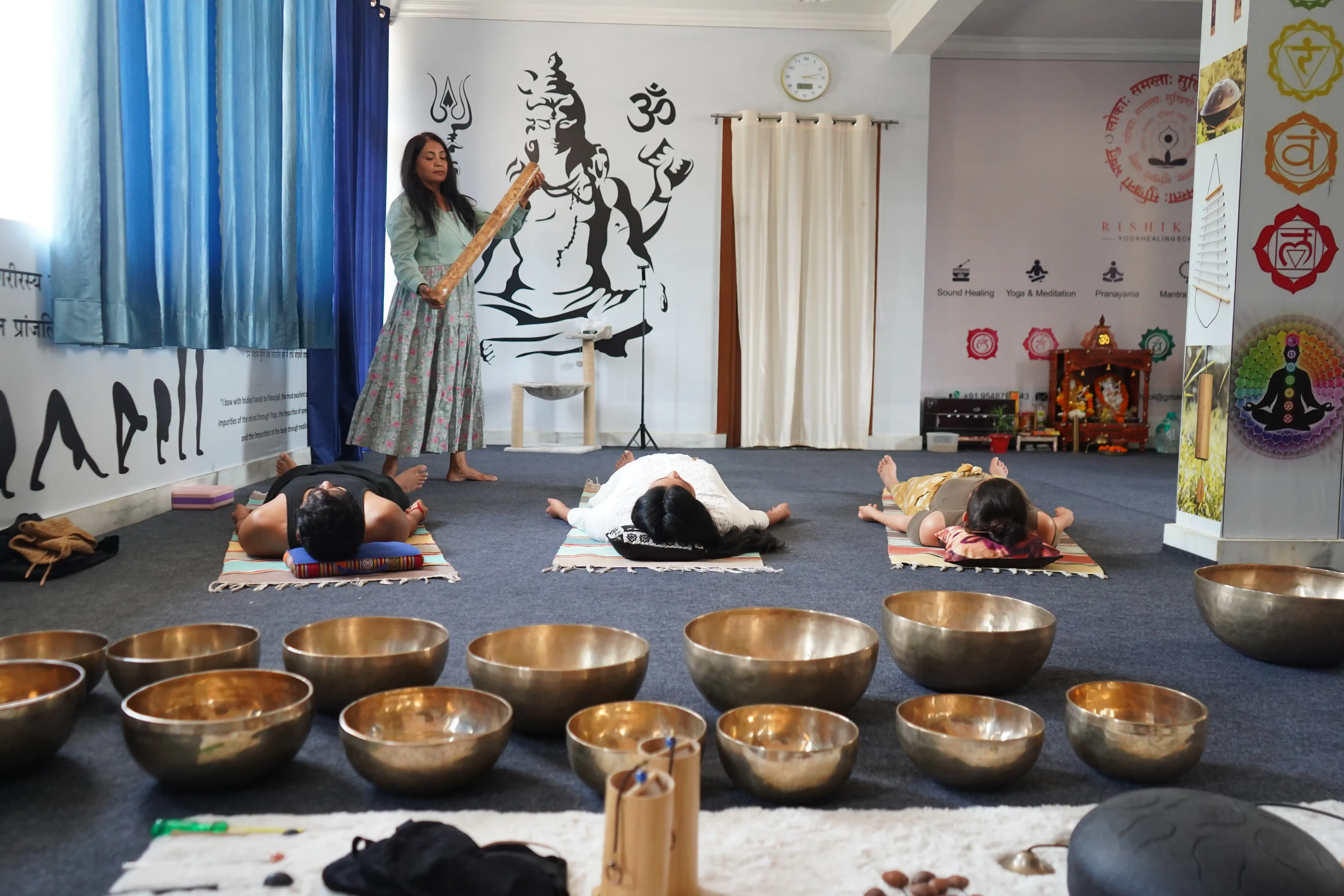
Introduction to Your First Sound Healing Session
Conducting a first sound healing session can be exciting and slightly challenging for a new practitioner. Even after learning how to play singing bowls and other instruments, facilitating a complete session requires preparation, organization, communication, and confidence.
The first session does not need to be complicated. A simple and well-planned experience is often easier to manage than a session filled with too many instruments and techniques. Beginners should focus on creating a comfortable environment and using the skills they have actually learned.
Know Your Session Objective
Before inviting participants, decide what type of session you are conducting. It might be a sound meditation, relaxation session, introductory singing bowl experience, or another sound-based wellness practice.
Having a clear objective will help you choose the appropriate instruments and session structure.
Prepare the Room
The room should be clean, organized, and comfortable. Participants need enough space to sit or lie down without feeling crowded.
- Prepare mats or comfortable seating.
- Keep instruments organized.
- Check the room temperature.
- Reduce unnecessary background noise.
- Make sure participants can hear your instructions.
- Keep the space clean and welcoming.
Prepare Your Instruments
Place your instruments where you can reach them easily. If you are using singing bowls, check that each bowl is stable and that the appropriate mallets are available.
Do not introduce instruments during the session simply because you remembered them at the last moment. Preparing the sequence beforehand can help the session feel more professional.
Welcome Your Participants
Begin by welcoming participants and explaining what will happen. A short introduction can reduce uncertainty, particularly for people who have never attended a sound healing session.
Explain the approximate duration, whether participants will sit or lie down, what types of sounds they may hear, and how they can communicate if they feel uncomfortable.
Create Comfortable Positions
Participants should be able to maintain a comfortable position throughout the session. Depending on the format, they may sit on cushions or lie on yoga mats.
Encourage participants to make reasonable adjustments so they do not remain in an uncomfortable position simply because the session has started.
Begin With Silence or Gentle Sound
The opening should be gradual. You can begin with a short period of silence or a gentle singing bowl. This gives participants time to settle and become aware of their surroundings.
A sudden loud sound may be uncomfortable, particularly for participants who are unfamiliar with sound sessions.
Introduce Singing Bowls
For a beginner session, singing bowls can provide a simple foundation. Play each bowl intentionally and allow enough time for participants to hear the resonance.
Listen to the sound yourself. Avoid striking the bowl repeatedly without allowing the previous tone to settle.
Use Silence Between Sounds
Silence is an essential part of a sound session. After a bowl or bell has been played, allow participants to hear the sound fade.
This pause can also give you time to decide whether the next sound is necessary. A session becomes more manageable when the practitioner is not constantly trying to fill every moment.
Gradually Develop the Session
Once participants are settled, you can gradually introduce additional instruments that you have been trained to use. The progression should remain controlled and comfortable.
Possible Progression
- Silence and settling.
- Gentle singing bowl sounds.
- Additional bowl tones.
- Optional bells or tuning fork work.
- Gradual introduction of broader sounds where appropriate.
- Quiet periods between instruments.
- Slow reduction of sound toward the closing.
Monitor Volume and Participant Comfort
Volume should always be considered. A sound that feels comfortable in a large room may feel much stronger in a small room.
Observe the environment and remain open to feedback. If a participant communicates discomfort, respond respectfully and make reasonable adjustments.
Guide Participants Back to Awareness
Do not end the session abruptly. Gradually reduce the instruments and allow a period of silence. Then provide a simple instruction to help participants become aware of their breathing, body, and surroundings.
Give participants enough time before asking them to sit up or stand.
Invite Feedback
After the session, participants may want to share their experience. Listen without making assumptions about what their experience means medically or psychologically.
Simple questions about comfort, sound level, session length, and overall experience can provide useful feedback for improving future sessions.
Review Your Own Performance
After your first session, take time to evaluate what happened. Consider which instruments worked well, whether the transitions were smooth, whether the session was too long, and whether participants seemed comfortable.
Writing down observations after each session can help you improve over time.
Practice Before Conducting Larger Sessions
New practitioners should gain confidence gradually. Start with practice sessions and small groups where appropriate before attempting larger events.
Regular practice will help improve instrument handling, timing, communication, and session management.
Learn Professional Sound Healing Techniques
Training can help beginners understand the practical details that are difficult to learn simply by watching videos. A structured course can provide demonstrations, hands-on practice, session planning, and guidance from experienced teachers.
Rishikesh Yoga Healing School offers sound healing courses in Rishikesh for people who want to learn sound healing instruments, meditation applications, session facilitation, and practical techniques.
Conclusion
Your first sound healing session does not need to be complicated. Careful preparation, a clear objective, suitable instruments, controlled volume, thoughtful silence, and good communication can create a structured experience.
Remember that confidence develops through practice. Use the techniques you have learned, listen carefully, observe participant comfort, and review each session afterward. With continued training and experience, conducting sound healing sessions can become more natural and organized.
Related Articles
- What Is Sound Healing? A Beginner's Complete Guide
- How Does Sound Healing Work? Science, Frequencies & Benefits
- 15 Benefits of Sound Healing for Mind and Body
- Sound Healing for Anxiety: Can Vibrations Calm the Mind?
- Sound Healing for Better Sleep: Does It Really Help?
- What Happens During a Sound Healing Session? Complete Beginner's Guide
- Sound Healing vs Meditation: What's the Difference?
- Singing Bowls Explained: How They Help in Healing
- Tibetan Singing Bowls vs Crystal Singing Bowls: Which Is Better?
- Best Healing Frequencies Explained (396Hz–963Hz): Complete Guide
- What Is Sound Bath Meditation? Benefits & Beginner Guide
- Can Sound Healing Reduce Stress Naturally
- Is Sound Healing Backed by Science? Research, Benefits & Facts
- Chakra Sound Healing: Understanding Each Energy Center
- 7 Signs Your Body Needs Sound Healing
- How Different Sound Healing Instruments Create Different Experiences
- Crystal Singing Bowl Sizes Explained: How Bowl Size Influences Sound
- Chakras and Sound Healing: Exploring the Traditional Connection
- How to Choose Your First Crystal Singing Bowl
- Mallet vs Rubber O-Ring: Understanding Crystal Bowl Playing Techniques
- Group Sound Healing vs Individual Sessions: Understanding the Differences
- Sound Healing vs Music Therapy: What Is the Difference
- 7 Sound Healing Instruments Every Beginner Should Know
- The History of Singing Bowls: From Traditional Use to Modern Wellness
- Can You Feel Sound Vibrations? Understanding Vibration and Body Awareness
- Tuning Forks in Sound Healing: What Are They and How Are They Used
- What Are Solfeggio Frequencies and Why Are They Popular in Sound Healing
- What Should You Learn Before Offering Sound Healing Sessions Professionally
- Different Types of Gongs and Their Uses in Sound Sessions
- How to Develop Listening Skills as a Sound Healing Practitioner
Start Your Sound Healing Learning Journey
Join our sound healing programs and explore the power of sound, vibration, and holistic wellness.
Contact Us