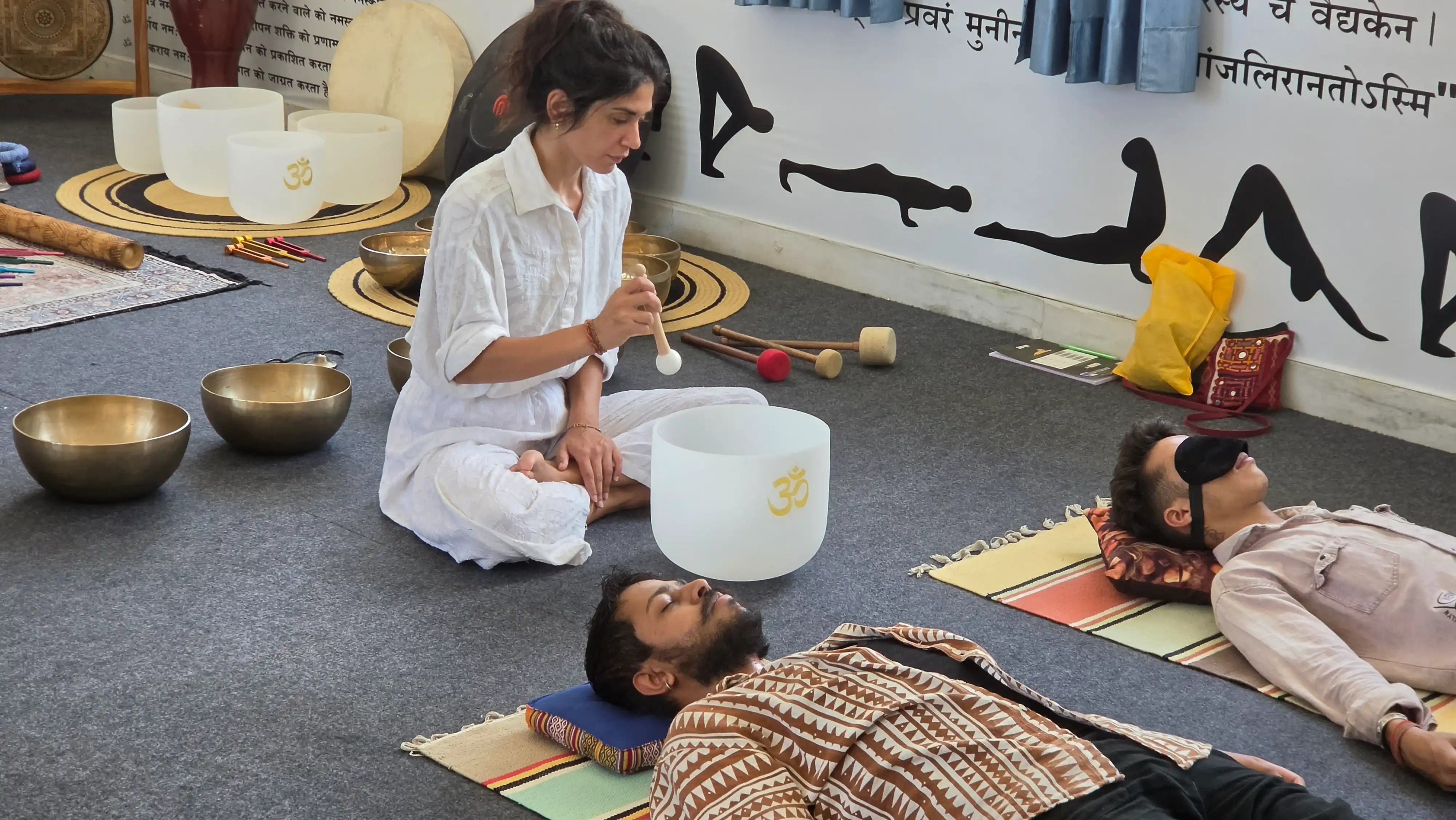
Introduction to Teaching Sound Healing
Many students who complete a sound healing course eventually ask whether they can teach sound healing themselves. Certification can be an important educational milestone, but becoming an effective teacher involves more than receiving a certificate.
Teaching requires knowledge, practical experience, communication skills, session-planning ability, and an understanding of professional boundaries. A certificate may document completion of training, while continued practice helps a practitioner develop confidence and teaching ability.
What Does Sound Healing Certification Mean?
A sound healing certificate generally confirms that a student has completed the requirements of a particular training provider. The exact meaning can vary between schools and programs.
Therefore, students should understand what their specific certification covers. They should review the course hours, curriculum, assessment process, practical training, and any professional guidance provided by the school.
Certification Is a Foundation
Completing a certification course can provide a foundation in sound healing techniques. Students may learn about singing bowls, gongs, tuning forks, meditation, relaxation, sound awareness, and session structure.
However, teaching other people requires continued development. A newly certified practitioner should not assume that completing one course automatically makes them an experienced teacher.
Develop Your Instrument Skills
Before teaching sound healing, practitioners should become comfortable with the instruments they intend to teach. This includes understanding how to hold and activate instruments, how to control sound, and how different techniques change the resulting tone.
Skills Worth Practicing
- Basic singing bowl techniques.
- Controlled striking and resonance.
- Different mallet techniques.
- Basic gong playing where appropriate.
- Tuning fork handling.
- Using tingsha bells and other transition instruments.
- Creating appropriate periods of silence.
Learn to Facilitate Before You Teach
Teaching sound healing is easier when you have experience facilitating sessions. Practitioners can begin by practicing with friends, classmates, or small groups where appropriate and with informed consent.
This experience can reveal practical challenges that are not always obvious during training. Room acoustics, participant questions, timing, instrument placement, and session pacing all become easier to understand through experience.
Understand How to Structure a Lesson
Teaching an instrument is different from simply playing it. A teacher needs to break a technique into understandable steps and explain what students should observe while practicing.
A lesson might begin with an explanation, followed by demonstration, student practice, observation, correction, and repetition. This structure can make practical learning more effective.
Teach According to Your Training
Practitioners should teach within the scope of what they have actually learned and practiced. If a person has completed an introductory singing bowl course, they should not automatically present themselves as an expert in every form of sound healing.
Honest communication about training and experience is an important part of professional practice.
Develop Communication Skills
Good teaching depends on clear communication. Students need to understand instructions without feeling overwhelmed by technical terminology.
A sound healing teacher should be able to explain where to place an instrument, how to hold a mallet, how much pressure to use, how to listen to the resulting sound, and how to correct common mistakes.
Create a Safe Learning Environment
Students need to feel comfortable making mistakes. Learning instruments requires repetition, and beginners may initially produce sounds that are too loud, too short, or inconsistent.
The teacher's role is to guide students patiently and explain how they can improve. Constructive feedback can help students develop confidence without creating unnecessary pressure.
Teach Session Planning
If your goal is to train future sound healing practitioners, instrument techniques are only one part of the curriculum. Students also need to understand how to organize a complete session.
- Preparing the room.
- Preparing instruments.
- Welcoming participants.
- Explaining the session.
- Creating a gradual sound progression.
- Managing volume and timing.
- Using silence effectively.
- Closing the session appropriately.
Include Professional Ethics
Teaching sound healing should include professional ethics. Students should understand consent, communication, participant comfort, confidentiality where applicable, and appropriate boundaries.
They should also understand that wellness practices should not be presented as replacements for medical diagnosis or treatment. Avoiding unsupported claims helps maintain responsible professional communication.
Build Experience Before Offering Advanced Training
Newly certified practitioners may benefit from gaining practical experience before designing advanced teacher-training programs. Facilitating sessions, attending workshops, practicing instruments, and continuing education can gradually expand professional knowledge.
Teaching should develop alongside experience rather than immediately following certification simply because a certificate has been received.
Can You Teach Sound Healing Professionally?
Whether someone can offer sound healing training professionally depends on their training, experience, local regulations, business structure, and the claims they make about their services. Certification can provide evidence of completed education, but professional teaching involves additional responsibilities.
Practitioners should also check any local requirements that apply to their specific business or professional activities.
Creating Your Own Sound Healing Course
Experienced practitioners may eventually create workshops or structured training programs. A well-designed course should have clear learning objectives, organized modules, practical exercises, assessment methods, and transparent certification information.
Students should know exactly what they will learn and what level of competence the course is intended to provide.
Continue Your Own Education
A teacher should remain a learner. Continuing education can include advanced instrument workshops, meditation studies, practical supervision, teaching methodology, and exploration of different sound traditions.
Continued learning can also help teachers keep their instruction accurate and relevant while developing their own professional approach.
Building a Teaching Journey in Rishikesh
Rishikesh offers an environment where yoga, meditation, and wellness education are widely practiced. Learners can begin with foundational sound healing training and gradually develop their own practice through continued experience.
Rishikesh Yoga Healing School offers sound healing training in Rishikesh for learners who want to understand sound healing instruments, practical techniques, meditation applications, and session facilitation.
Conclusion
Yes, certification can be an important step toward teaching sound healing, but certification alone does not automatically create an experienced teacher. Effective teaching requires practical skill, communication ability, session experience, ethical awareness, and continued education.
Those who want to teach should first become comfortable facilitating sound sessions, develop strong instrument techniques, understand their professional scope, and learn how to explain concepts clearly. With time and consistent practice, a certified practitioner can gradually develop the skills needed to educate others responsibly.
Related Articles
- What Is Sound Healing? A Beginner's Complete Guide
- How Does Sound Healing Work? Science, Frequencies & Benefits
- 15 Benefits of Sound Healing for Mind and Body
- Sound Healing for Anxiety: Can Vibrations Calm the Mind?
- Sound Healing for Better Sleep: Does It Really Help?
- What Happens During a Sound Healing Session? Complete Beginner's Guide
- Sound Healing vs Meditation: What's the Difference?
- Singing Bowls Explained: How They Help in Healing
- Tibetan Singing Bowls vs Crystal Singing Bowls: Which Is Better?
- Best Healing Frequencies Explained (396Hz–963Hz): Complete Guide
- What Is Sound Bath Meditation? Benefits & Beginner Guide
- Can Sound Healing Reduce Stress Naturally
- Is Sound Healing Backed by Science? Research, Benefits & Facts
- Chakra Sound Healing: Understanding Each Energy Center
- 7 Signs Your Body Needs Sound Healing
- How Different Sound Healing Instruments Create Different Experiences
- Crystal Singing Bowl Sizes Explained: How Bowl Size Influences Sound
- Chakras and Sound Healing: Exploring the Traditional Connection
- How to Choose Your First Crystal Singing Bowl
- Mallet vs Rubber O-Ring: Understanding Crystal Bowl Playing Techniques
- Group Sound Healing vs Individual Sessions: Understanding the Differences
- Sound Healing vs Music Therapy: What Is the Difference
- 7 Sound Healing Instruments Every Beginner Should Know
- The History of Singing Bowls: From Traditional Use to Modern Wellness
- Can You Feel Sound Vibrations? Understanding Vibration and Body Awareness
- Tuning Forks in Sound Healing: What Are They and How Are They Used
- What Are Solfeggio Frequencies and Why Are They Popular in Sound Healing
- What Should You Learn Before Offering Sound Healing Sessions Professionally
- Different Types of Gongs and Their Uses in Sound Sessions
- How to Develop Listening Skills as a Sound Healing Practitioner
Start Your Sound Healing Learning Journey
Join our sound healing programs and explore the power of sound, vibration, and holistic wellness.
Contact Us